
What is Aari Embroidery?
Aari Embroidery refers to a technique of embroidery or beadwork in India that uses a hollow needle for stitching and tapes to keep the material taut under the needle. The name comes from its embellishment with beads, stones and golden and silver threads. This makes the finished handicraft look luxurious.
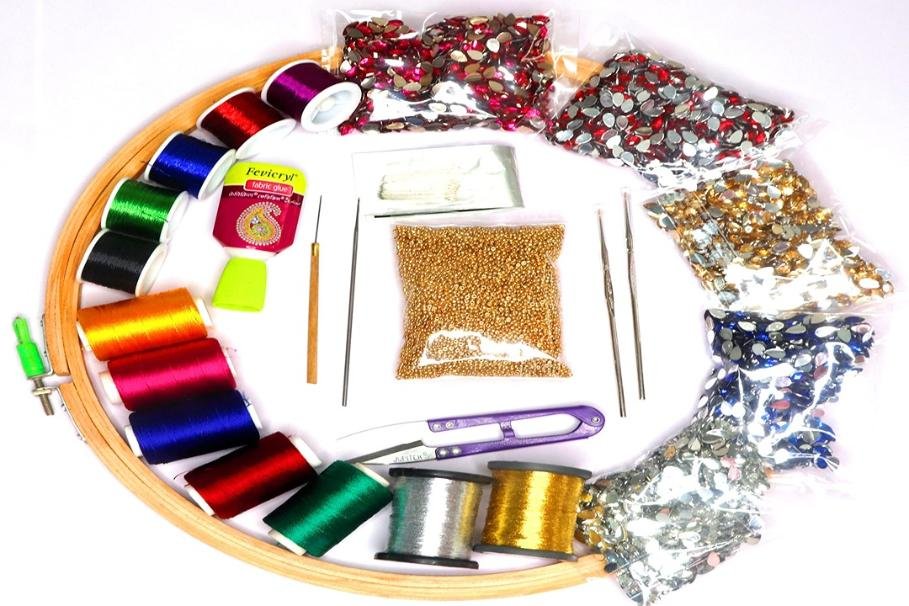
( Source: Vardha )
Aari Embroidery features different styles based on threads, beads, and needles. For example, there are multiple mini-styles such as Salma, Gota, Nakshi, and Dabka. Aara, Kattari, Sitara and Tikena, each produce a variety of unique and fascinating patterns. With its excellent needlework items made using Aari Embroidery are beautifully graceful.
How to do Aari Embroidery?
Aari Embroidery is a delicate process that entails intricate and detailed steps to bring out beautiful and elaborate patterns from fabric. Below are the steps on how to do Aari Embroidery:
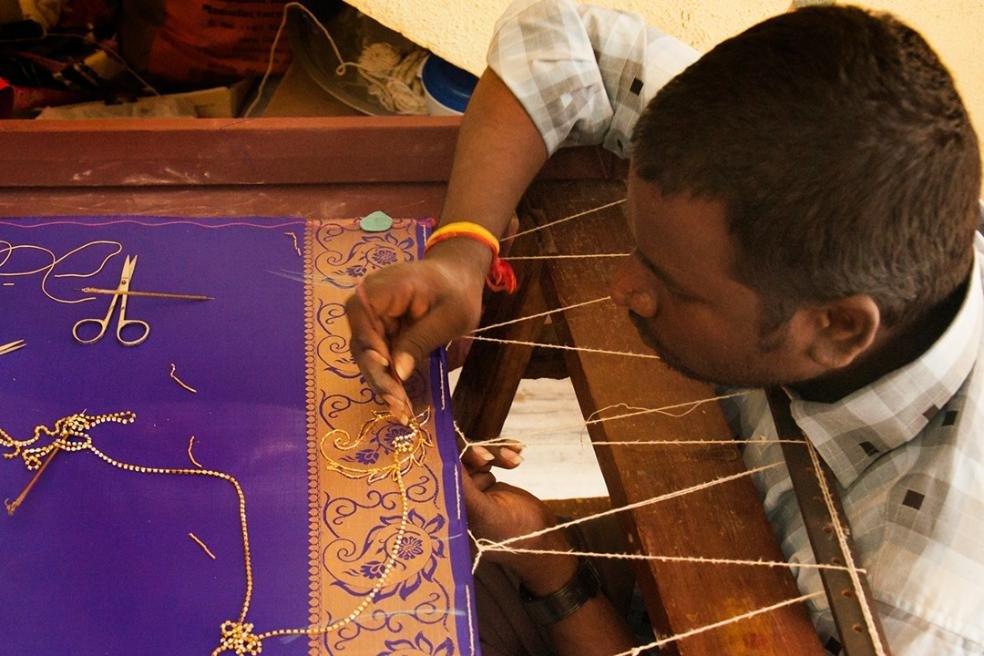
- Fabric Preparation: Known as the ‘Adda,’ the frame of this form is one that tautly enshrines a thick spread of cloth, much like a knockdown bed. The fabric has to be uniformly taut, much like the setu ko in dhakka knots, for seamless embroidery.
- Preparing Pattern: The process begins by drawing the design pattern or its equivalent onto paper. Mostly, artisans draw this pattern onto tracing paper using a lead pencil.
- Pattern Transferring: After the pattern is finalized by the artist(s), it is then transferred to the fabric. The technique involved putting the pattern down over the cloth and pressing it with a needle
- Design Tracing: The Kerosene or lamp oil mixed with robin blue which is used to trace the design onto paper. This mixture is applied using a Sponge–One soaked in holes of the pattern but subsequently left “dry” so that holes can be traced back onto the fabric.
- Using Aari Needle: The Aari needle is a special kind of needle hollowing, tailored for crafting this particular kind of embroidery. It employs several shading techniques to depict figures or concepts.
- Professional Stitching: The artisans pass their needles through the material very carefully, making precise lines and designs. After that, they stitch continuously, forming loops in a series following the lines indicated by these patterns.
- Final Touches: When finishing embroidering, flatten thread from below using a wooden hammer and blacksmith’s iron. By doing so, this step gives an overall look at the final piece and adds to how well the embroidery looks.
( Source: Dsource )
Initially practised mostly in Muslim-dominated villages, Aari Embroidery has since spread its reach across various regions in India. As such locations as Kutch, Rajasthan, Lucknow or Uttar Pradesh have contributed towards growing changes within Aari work adding up their specific touch and traditional patterns found in these crafts.
The demand for Aari Embroidery has not only grown within India but has also gained recognition in global markets. Its timeless elegance and versatility make Aari-embellished garments suitable for various occasions and attire types.
Leave A Comment